
[The wrap dress] taught me my three essential F’s
in designing. It’s flattering, feminine and,
above all, functional.
Diane Von Fürstenberg
The world of women’s clothing design has historically been dominated by men. For centuries women were employed for the more tedious detail work such as lace making, attaching ribbons, bows or other embellishments to clothing, but they were kept out of the actual design and production of clothing. Nevertheless, women eventually found their way into the industry and today the name of Chanel is equal to that of Dior and the Olsen twins brand, The Row, is as known for high end luxury as Louis Vuitton. Along the way there are many influential, if little known, women fashion pioneers. One example is Anne Kellerman, who upended American swimwear (see link below). Following are women with whom you may not be familiar but who dramatically influenced and changed the way we dress—making our wardrobes more ‘flattering, feminine and functional.’
But before there could be women designers, the defensive walls and ramparts protecting the all male fabric and tailoring guilds had to be pierced, breached and defeated. This effectively began in 1652 when female seamstresses were admitted to the tailoring guild in Aix-en-Provence. The process was long and arduous but by the late 1800’s women were finally designing clothing for women.


JEANNE PAQUIN opened her Maison in 1895 (243 years after the first piercing of guild control) and was the first major female couturière in Paris. Though often overshadowed by her male contemporaries, Charles Frederick Worth (see link below) and Paul Poiret (link below ), she more than holds her own in fashion history. Paquin was an astute businesswomen who understood she was positioned at the pivot point between old and new—the old loved elaborate decorations but the new was demanding movement, comfort and independence. She honored the old but embraced the new with daring, creativity and imagination. She preceded Paul Poiret by a year with both her Empire-line dress (1906) and her kimono coat. She recognized the inconvenience of changing clothes several times a day and introduced the concept of garments that moved from day into evening. She created a style to facilitate walking at a time when that was often the only acceptable form of exercise for women.
Beyond her innovations, her real genius was her intuitive understanding of the value of marketing, of being memorable. Worth may have introduced the concept of live models to show his clothing but Jeanne Paquin exceeded him by several orders of magnitude. In 1913 she famously staged her show, “Tango Tea,” at the Queens Theater in London. Guests were served tea as her models performed the tango in her latest designs. More than a parade of dresses, her designs became unforgettable with the dynamic movement of a current dance craze. Every woman wanted to be on the dance floor wearing Paquin!
The following year she sent her sophisticated Parisian models onto the streets of major American cities in her 1914 Spring Collection wearing outrageous pink and mauve wigs—imagine the sensation this caused then. Jeanne Paquin knew the value of being remembered and talked about long before our social media Instagram influencers.
Her Maison eventually employed over 2,000 employees and she had shops in major cities around the world, making her an important contributor to the French economy. Jeanne Paquin was the first female president of the Chambre Syndicale de la Haute Couture (founded by Worth). In 1913 she was awarded the Légion d’honneur—the first female designer to be so honored. You may not be familiar with Jeanne Paquin’s designs but every time a fashion show attracts attention, it is in the shadow of her brilliant imagination.


If today’s social media and “being seen” is the descendant of Jeanne Paquin, the sensuous silhouette belongs to MADELEINE VIONNET. She began her training under the guidance of English court dressmaker, Kate Reilly, before working at Callot Soeurs, renowned for their obsessive attention to detail. As a result, she was technically rigorous in her construction by the time she opened her atelier in 1912. Her interest in eliminating the tightly corseted garments men had designed for women, led to her breakthrough bias cut technique. By cutting diagonally across the grain of a fabric, her garments sinuously draped across the body and flowed with its movement. Madame Vionnet worked with the curves of the female body, rather than encasing them in a structure. Rendered in luxurious fabrics like silk, satin and velvets, the bias cut, in the hands of Vionnet, redefined the female form and aesthetic. Her garments, stretched, draped, clung, twisted, skimmed and moved! The bias cut became her calling card and a hallmark of early Hollywood films. Madeleine Vionnet’s construction and draping techniques are widely copied today to give elegance to women’s garments. Today’s body conscious slip dresses and skirts, the wide, dramatic sweep of a cape or coat or the fluid drape of an evening gown, owe their allure to her dedication to make fabric fit, flatter and move with the female body.


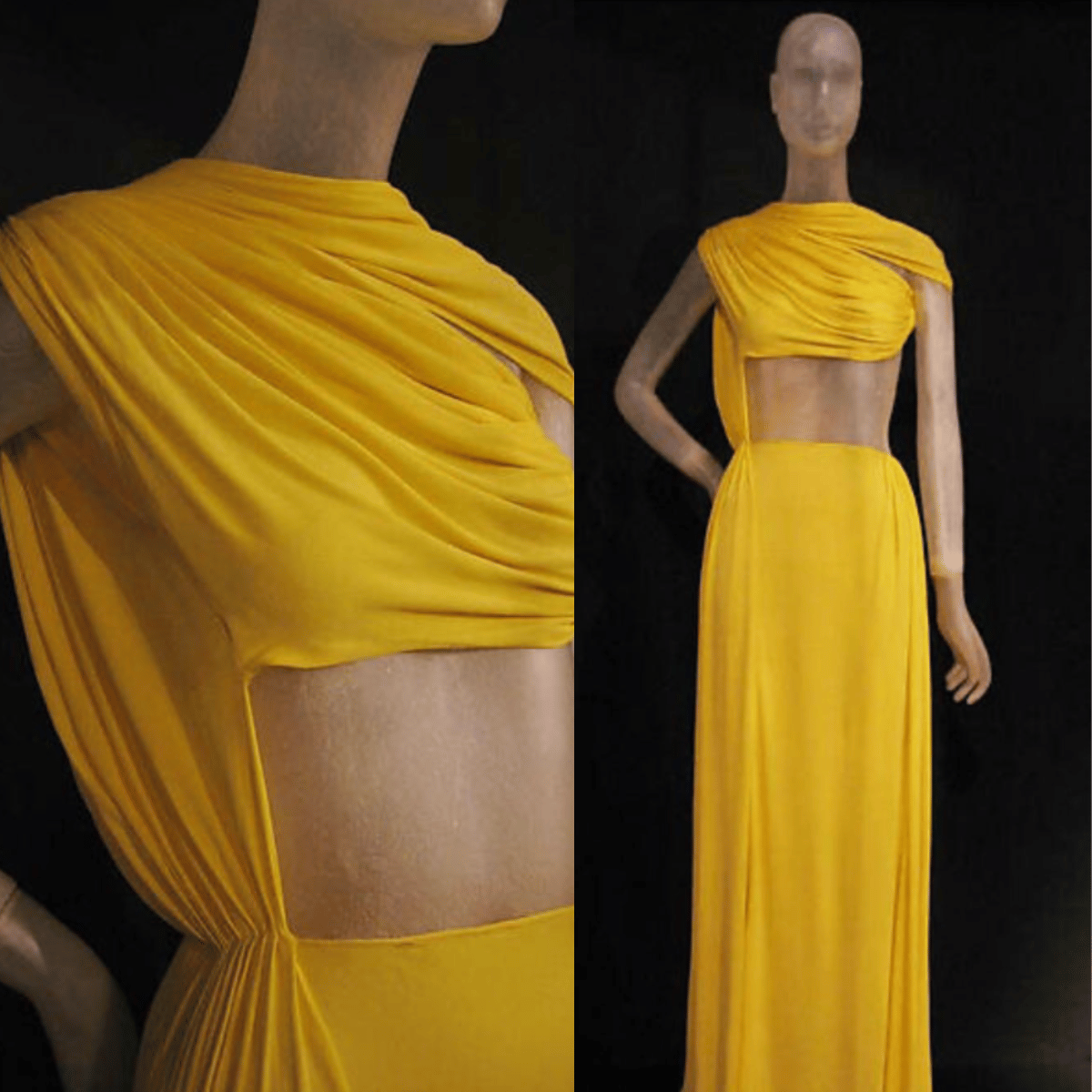
For pure elegance we have Germaine Émile Krebs, more commonly known as MADAME GRÉS. Somewhat confusingly she first designed under several names—La Maison Alix (her family nickname), Alix Barton, (using a coworkers last name), and simply Alix. After she married Russian painter, Serge Czerefkov, she settled on Madame Grés, an abbreviated anagram of his first name. Her sculptured, classic couture gowns reflected her early Greco-Roman architectural interest and became her signature style. These were labor intensive undertakings, often requiring over three hundred hours to complete. Each pleat done by hand and draped to shape the garment. Her exquisitely wrapped and draped gowns were a forerunner of Diane von Fürstenberg’s iconic wrap dresses of the 1970’s. Unrelentingly focused on perfecting the construction while keeping the silhouette simple and sophisticated, she was worn by luminaries such as the Duchess of Windsor, Grace Kelly and Greta Garbo, among others. Like Jeanne Paquin she was awarded the Légion d’honneur (1947) and she, too, served as president of the Chambre Syndicale in 1972. She was awarded Cartier’s Golden Thimble award in 1976, NYU’s Creative Leadership in the Arts Award in 1978. Though Madame Grès died in obscurity in 1993, her rigorous standards of excellence are still admired today and influence brands like Loro Piana, The Row and others dedicated to clean, sculptural simplicity of line and elegance.


Born in New York in 1903, the same year as the French Madame Grès, ADELE SIMPSON was a thoroughly American designer. Though contemporaries, their styles and approach to fashion could not be more different. While European couturiers continued creating one-of-kind designs, Simpson focused on dressing a growing mass market of independent, active women. As one of the highest paid designers at the heart of American fashion production, 7th Avenue in New York City, Simpson designed under her own name at Mary Lee until she bought the company in 1949. At her eponymous facility, she excelled at delivering what the American woman wanted: fashionable, practical, ready-to-wear garments at accessible prices. And, after decades of looking to Europe for fashion, they also wanted sophisticated clothing that did not require a personal designer, a maid to dress them nor an inheritance to acquire. She recognized the inconvenience of pulling on a dress over the head and designed dresses one could step into simply and easily. Simpson was one of the first to incorporate slacks into her mix and match ensembles (building on the comfort of the walking skirt of Jeanne Paquin), creating what today we describe as capsule wardrobes.
Simpson traveled extensively and brought back fabrics, accessories and cultural nuances and ideas and translated them into stylish but affordable designs. She was particularly adept at editing Parisian styles and motifs, incorporating a single detail such as a belt, sash, silhouette or even a color to add flair and style to her garments. Savvy and experienced in the economics of mass production, she created simplified patterns and used durable, quality fabrics like wool crepes, silks and cotton, to contain costs. She famously brought cotton “out of the kitchen” and used it in cocktail dresses and evening gowns. Her clothing was sophisticated enough to be worn at high profile events by celebrities like Elizabeth Taylor and Claudette Colbert and a long list of First Ladies: Mamie Eisenhower, Lady Bird Johnson, Pat Nixon, Betty Ford and Barbara Bush.
Adele Simpson received the first National Cotton Council’s Cotton Fashion Award, the Neiman Marcus Award for Distinguished Service in the Field of Fashion and the Coty American Fashion Critics Award. Adele Simpson may be one of the designers you didn’t know but if you have dresses you can step into, love the comfort of cotton or have mix and match pieces in your closet, you are wearing concepts introduced by Adele Simpson.
From Jeanne Paquin’s audacious marketing, Madeleine Vionnet’s fluid use of fabrics, to the clean, sculptural line of Madame Grès and finally to the American practicality of Adele Simpson, your Purely Personal style has benefited from the innovations of these now forgotten women pioneers of clothing.
Fun Fact: As a young girl Adele Simpson performed in vaudeville acts and was billed as “…the Petite Nightingale.” The adult “petite nightingale” was 4’9” tall but was a towering figure in the intensely fast paced and competitive mid-20th century of the American fashion world.
If you missed the links and want to take a deeper dive, here are links to related blogs:


